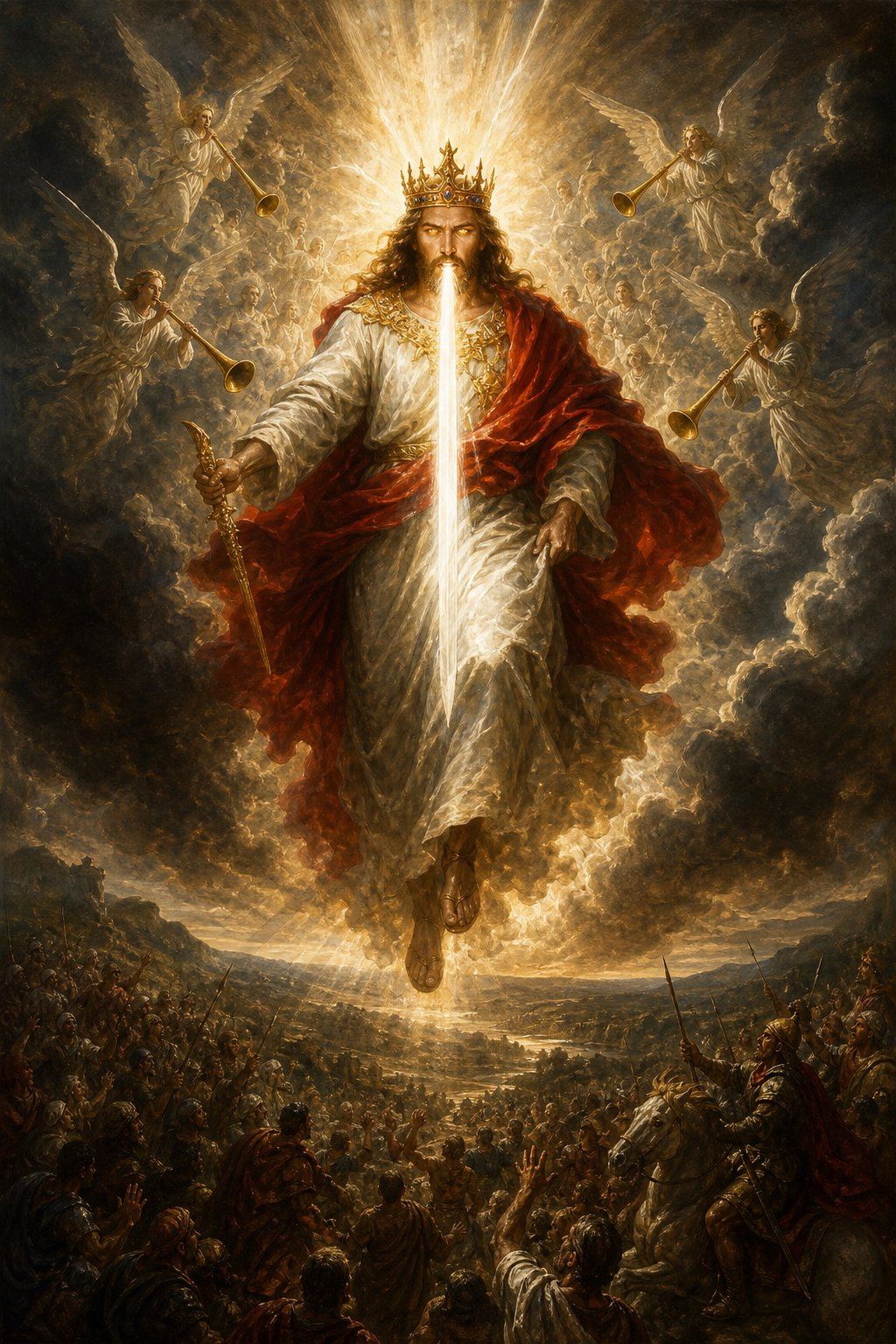
Jesus the Messiah — King of Kings & Lord of Lords
The kings category of the Bible begins and ends with Him: the Lion of the tribe of Judah (Genesis 49:10; Revelation 5:5), the Son of David (Matthew 1:1), the Alpha and the Omega (Revelation 22:13), enthroned at the right hand of God (Psalm 110:1; Hebrews 1:3), who returns on a white horse to judge and make war in righteousness (Revelation 19:11-16). Every earthly throne below is a footnote to this one.
| King | Years Ruled | Bible Reference | Prophets / Witnesses Sent | How It Ends |
|---|---|---|---|---|
| Jesus the Messiah — KING OF KINGS eternal | c. AD 30–present, and forever (Luke 1:32-33) | Revelation 19:11-16 · Rev 22:13 · Matt 25:31-46 | John the Baptist (the forerunner); the Twelve; Paul to the nations | Ascended in glory (Acts 1:9-11); returns in like manner to judge the quick and the dead (2 Tim 4:1); the last enemy, death, destroyed; then He delivers the kingdom to the Father (1 Cor 15:24-26) — a throne with no end |
United Kingdom of Israel
Urdu references link to the Revised Urdu Bible (URV) on bible.com.
| King | Years Ruled | Urdu Bible Reference | Prophets Sent | How It Ended |
|---|---|---|---|---|
| Saul | c. 1050–1010 BC (40 yrs) | 1 Samuel 31 | Samuel | Defeated by the Philistines at Mt. Gilboa; wounded, fell on his own sword |
| David | c. 1010–970 BC (40 yrs) | 1 Kings 2:10-11 | Nathan, Gad | Died of old age, natural death |
| Solomon | c. 970–931 BC (40 yrs) | 1 Kings 11:41-43 | Ahijah the Shilonite | Died naturally mixed — but the kingdom was torn from his son over his idolatry in old age |
Kingdom of Israel — Northern (10 Tribes)
All 19 kings of the north are recorded as evil — none turned the nation from Jeroboam's golden calves.
| King | Years Ruled | Urdu Bible Reference | Prophets Sent | How It Ended |
|---|---|---|---|---|
| Jeroboam I evil | 931–910 BC (22 yrs) | 1 Kings 14:19-20 | Unnamed man of God (1 Ki 13), Ahijah | Died naturally |
| Nadab evil | 910–909 BC (2 yrs) | 1 Kings 15:27-28 | — | Assassinated by Baasha while besieging Gibbethon |
| Baasha evil | 909–886 BC (24 yrs) | 1 Kings 16:5-6 | Jehu son of Hanani | Died naturally |
| Elah evil | 886–885 BC (2 yrs) | 1 Kings 16:9-10 | — | Assassinated by Zimri while drunk |
| Zimri evil | 885 BC (7 days) | 1 Kings 16:18 | — | Burned the palace down over himself as Omri's forces closed in — suicide |
| Omri evil | 885–874 BC (~12 yrs) | 1 Kings 16:27-28 | — | Died naturally |
| Ahab evil | 874–853 BC (22 yrs) | 1 Kings 22:34-38 | Elijah, Micaiah son of Imlah | Struck by a stray arrow in battle at Ramoth-gilead; bled to death in his chariot |
| Ahaziah evil | 853–852 BC (2 yrs) | 2 Kings 1:17 | Elijah | Died from injuries after falling through a palace lattice |
| Joram (Israel) evil | 852–841 BC (12 yrs) | 2 Kings 9:24 | Elisha | Shot through the heart by Jehu |
| Jehu | 841–814 BC (28 yrs) | 2 Kings 10:34-35 | Elisha | Died naturally mixed — purged Baal worship but kept the golden calves |
| Jehoahaz (Israel) evil | 814–798 BC (17 yrs) | 2 Kings 13:8-9 | Elisha | Died naturally |
| Jehoash (Israel) | 798–782 BC (16 yrs) | 2 Kings 13:12-13 | Elisha (on his deathbed) | Died naturally |
| Jeroboam II evil | 793–753 BC (41 yrs) | 2 Kings 14:28-29 | Jonah, Amos, Hosea | Died naturally |
| Zechariah (Israel) evil | 753 BC (6 months) | 2 Kings 15:10 | Hosea, Amos | Assassinated in public by Shallum |
| Shallum evil | 752 BC (1 month) | 2 Kings 15:14 | Hosea | Assassinated by Menahem |
| Menahem evil | 752–742 BC (10 yrs) | 2 Kings 15:22 | Hosea | Died naturally |
| Pekahiah evil | 742–740 BC (2 yrs) | 2 Kings 15:25 | Hosea | Assassinated by his own officer, Pekah |
| Pekah evil | 752–732 BC (20 yrs, incl. rival period) | 2 Kings 15:30 | Hosea, Oded | Assassinated by Hoshea |
| Hoshea evil | 732–722 BC (9 yrs) | 2 Kings 17:4-6 | Hosea | Imprisoned by Assyria's Shalmaneser V; Israel destroyed, 722 BC |
Kingdom of Judah — Southern
A mixed line — some reformers, some among the worst kings in the whole record.
| King | Years Ruled | Urdu Bible Reference | Prophets Sent | How It Ended |
|---|---|---|---|---|
| Rehoboam evil | 931–913 BC (17 yrs) | 1 Kings 14:29-31 | Shemaiah | Died naturally; kingdom split under him |
| Abijam evil | 913–910 BC (3 yrs) | 1 Kings 15:7-8 | — | Died naturally |
| Asa good | 910–869 BC (41 yrs) | 1 Kings 15:23-24 | Azariah son of Oded, Hanani | Died naturally, of a disease in his feet in old age |
| Jehoshaphat good | 872–848 BC (25 yrs) | 1 Kings 22:50 | Jehu son of Hanani, Jahaziel | Died naturally |
| Jehoram (Judah) evil | 848–841 BC (8 yrs) | 2 Chronicles 21:18-20 | Elijah (sent a written warning) | Died of a horrific, prolonged bowel disease |
| Ahaziah (Judah) evil | 841 BC (1 yr) | 2 Kings 9:27 | Elisha (era) | Hunted down and killed by Jehu's men |
| Athaliah (usurper queen) evil | 841–835 BC (6 yrs) | 2 Kings 11:15-16 | Jehoiada the priest confronted her | Executed by the sword on Jehoiada's order |
| Joash (Judah) mixed | 835–796 BC (40 yrs) | 2 Kings 12:19-21 | Zechariah son of Jehoiada — whom Joash had stoned to death | Assassinated by his own servants |
| Amaziah mixed | 796–767 BC (29 yrs) | 2 Kings 14:19-20 | Unnamed prophet (2 Chr 25:15-16) | Assassinated in a conspiracy, fled to Lachish, killed there |
| Uzziah / Azariah mixed | 792–740 BC (52 yrs) | 2 Chronicles 26:19-21 | Zechariah (2 Chr 26:5); Isaiah began his ministry the year Uzziah died | Struck with leprosy for illegally burning incense in the Temple; died isolated |
| Jotham good | 750–732 BC (16 yrs) | 2 Kings 15:36-38 | Isaiah, Micah | Died naturally |
| Ahaz evil | 732–716 BC (16 yrs) | 2 Kings 16:19-20 | Isaiah, Micah, Oded | Died naturally — practiced child sacrifice |
| Hezekiah good | 716–687 BC (29 yrs) | 2 Kings 20:20-21 | Isaiah, Micah | Died naturally |
| Manasseh evil | 697–642 BC (55 yrs) | 2 Kings 21:17-18 | Unnamed prophets (2 Ki 21:10-15); tradition holds Isaiah was martyred under him | Died naturally — the most evil king of Judah, but repented after Assyrian captivity (2 Chr 33:11-13) |
| Amon evil | 642–640 BC (2 yrs) | 2 Kings 21:23 | — | Assassinated by his own servants |
| Josiah good | 640–609 BC (31 yrs) | 2 Kings 23:29-30 | Huldah the prophetess, Jeremiah, Zephaniah | Killed in battle against Pharaoh Necho at Megiddo |
| Jehoahaz (Judah) evil | 609 BC (3 months) | 2 Kings 23:33-34 | Jeremiah | Deposed by Pharaoh Necho, deported to Egypt, died there |
| Jehoiakim evil | 609–598 BC (11 yrs) | 2 Kings 24:5-6 | Jeremiah, Habakkuk, Urijah (whom Jehoiakim had executed) | Died as Babylon's forces closed in; Jeremiah had prophesied he'd be left unburied "like a donkey" (Jer 22:18-19) |
| Jehoiachin evil | 598–597 BC (3 months) | 2 Kings 24:12,15 | Jeremiah, Ezekiel | Surrendered, deported to Babylon; later released and pensioned there |
| Zedekiah evil | 597–586 BC (11 yrs) | 2 Kings 25:5-7 | Jeremiah, Ezekiel | Watched his sons executed, then blinded and dragged to Babylon in chains — Jerusalem fell, 586 BC |
Foreign Kings in the Canonical Text
| King | Kingdom | Years Ruled | Urdu Bible Reference | Prophets Sent | How It Ended |
|---|---|---|---|---|---|
| Pharaoh of the Exodus | Egypt | c. 1446 or 1290s BC (disputed) | Exodus 14:26-28 | Moses, Aaron | His army drowned pursuing Israel through the Red Sea |
| Nebuchadnezzar II mixed | Babylon | 605–562 BC | Daniel 4:28-37 | Daniel, Jeremiah | Struck with 7 years of madness for pride; restored after acknowledging God, died naturally after |
| Belshazzar evil | Babylon | c. 553–539 BC (co-regent) | Daniel 5:30 | Daniel | Killed the same night the "writing on the wall" appeared; Babylon fell to the Medes/Persians |
| Darius the Mede | Media/Persia | 539 BC | Daniel 6:25-28 | Daniel | No death recorded; known for the lions' den account |
| Cyrus the Great | Persia | 559–530 BC | Ezra 1:1-4 | Isaiah named him by name in prophecy (Isa 44:28; 45:1); Daniel | No death recorded in Scripture; decreed the Jews' return from exile |
| Ahasuerus (Xerxes I) | Persia | 486–465 BC | Esther 10:1-3 | — | No death recorded |
| Artaxerxes I | Persia | 465–424 BC | Nehemiah 2:1-6 | Ezra, Nehemiah, Malachi (contemporary) | No death recorded |
Apocrypha — Seleucid Kings
1–2 Maccabees are not part of the Protestant canon, so there is no Urdu Revised Version (URV) link — references below are chapter citations only. Notably, the text of 1 Maccabees itself says prophecy had ceased in Israel by this period ("there was great distress in Israel... such as had not been since the time a prophet was no longer seen among them," 1 Macc 9:27) — which is why no named prophet confronts these kings.
| King | Years Ruled | Reference (chapter) | Prophets Sent | How It Ended |
|---|---|---|---|---|
| Alexander the Great | 336–323 BC | 1 Maccabees 1:1-7 | — (none; prophecy had ceased) | Died of illness after his conquests |
| Antiochus III the Great | 222–187 BC | 1 Maccabees 1:10 (background) | — | Died in a temple-looting raid in Elam (extra-biblical) |
| Seleucus IV Philopator | 187–175 BC | 2 Maccabees 3 | — | Assassinated by his own minister, Heliodorus |
| Antiochus IV Epiphanes evil | 175–164 BC | 2 Maccabees 9:5-12 | — (none named) | Desecrated the Temple, banned Torah observance, sparked the Maccabean revolt; died consumed by a horrific disease and worms — framed in the text as direct divine judgment |
| Antiochus V Eupator evil | 164–162 BC | 1 Maccabees 7:2-4 | — | Murdered by his cousin, Demetrius I |
| Demetrius I Soter | 162–150 BC | 1 Maccabees 10:50 | — | Killed in battle against the usurper Alexander Balas |
| Alexander Balas | 150–145 BC | 1 Maccabees 11:17 | — | Defeated in battle, fled, beheaded; his head sent to Ptolemy VI |
| Demetrius II Nicator | 145–140 BC; 129–125 BC | 1 Maccabees 14:1-3 | — | Captured and imprisoned by the Parthians; later restored, eventually killed |
| Antiochus VI Dionysus evil | 145–142 BC | 1 Maccabees 13:31-32 | — | Child-king; murdered by his own regent, Trypho |
| Trypho (usurper) evil | 142–138 BC | 1 Maccabees 15:10-14, 37 | — | Besieged, his coup collapsed, eventually killed |
| Antiochus VII Sidetes | 138–129 BC | (extra-biblical) | — | Killed in battle against the Parthians |
Apocrypha — Hasmonean Leaders (Jewish Side)
Not "kings" by title in 1–2 Maccabees (Judas, Jonathan, Simon are called leaders/high priests), but they functioned as the ruling line and are the direct ancestors of the later Hasmonean kings.
| Leader | Years Ruled | Reference (chapter) | Prophets Sent | How It Ended |
|---|---|---|---|---|
| Judas Maccabeus | 166–160 BC | 1 Maccabees 9:18 | — (1 Macc 4:46, 9:27 explicitly lament that no prophet was present) | Killed in battle at Elasa |
| Jonathan Apphus | 160–143 BC | 1 Maccabees 12:48; 13:23 | — | Lured into a trap and treacherously executed by Trypho |
| Simon Thassi | 142–135 BC | 1 Maccabees 16:11-16 | — | Assassinated at a banquet by his own son-in-law, Ptolemy, who wanted the throne |
| John Hyrcanus I | 135–104 BC | (extra-biblical / Josephus) | — | Died naturally |
Herodian Kings — New Testament Era
| King | Years Ruled | Urdu Bible Reference | Prophets Sent | How It Ended |
|---|---|---|---|---|
| Herod the Great evil | 37–4 BC | Matthew 2:19-20 | No prophet directly confronted him in the text | Ordered the massacre of the innocents; died of a gruesome disease (per Josephus: gangrene, worms) — Scripture simply records his death |
| Herod Antipas evil | 4 BC–39 AD | Mark 6:17-28 | John the Baptist confronted him directly over his unlawful marriage — then was beheaded for it | Exiled by Rome to Gaul; died in exile |
| Herod Agrippa I evil | 37–44 AD | Acts 12:21-23 | Peter and the apostles preached under his persecution | "Struck by an angel of the Lord" and "eaten by worms," died on the spot after accepting worship as a god |
| Herod Agrippa II | 50–100 AD | Acts 26:27-29 | Paul testified directly before him | Died naturally in Rome, last of the Herodian line (extra-biblical) |
Nero — Roman Emperor
| Ruler | Years Ruled | Urdu Bible Reference | Prophets / Apostles Sent | How It Ended |
|---|---|---|---|---|
| Nero evil | 54–68 AD | Acts 25:11-12 · 2 Timothy 4:6-8 | Paul (before his court, and awaiting execution during his reign); Peter, by tradition, also executed under him | Forced into suicide in 68 AD as the Senate turned against him and revolt spread across the empire; traditionally responsible for the executions of both Peter and Paul |
The Last King — The Beast & the Tribe of Dan Conjecture
The throne line closes with its darkest mirror: a king who is not a king, the Beast who receives worship that belongs to the King of Kings. Historically, and by many Bible researchers, it is assumed that the Antichrist will somehow spring from the tribe of Dan — a conjecture built from a striking omission, a serpent prophecy, and the unanimous voice of the earliest Fathers. This scriptorium documents it as conjecture: Scripture alone binds; the Fathers' opinion and the companion blog research are filed beneath it.
| King | Years Ruled | Bible Reference | Witnesses Sent | How It Ends |
|---|---|---|---|---|
| The Beast (Antichrist) last king | Future — “forty and two months” (Rev 13:5) | Revelation 13 · 2 Thessalonians 2:3-4 · Daniel 11:36-37 | The two witnesses (Rev 11); the three angels' proclamations (Rev 14); the Spirit's warning (Rev 14:9-11) | Cast alive into the lake of fire burning with brimstone at the appearing of the King of Kings (Rev 19:20); destroyed by the breath of Christ's mouth (2 Thess 2:8) |
The Biblical File on Dan
The Serpent by the Road
“Dan shall be a serpent by the way, an adder in the path, that biteth the horse heels…” — Jacob's dying oracle paints Dan in the very image Scripture later gives the serpent, Satan (Revelation 12:9).
The Lion's Whelp
“Dan is a lion's whelp: he shall leap from Bashan.” — the same lion imagery given to Judah (Gen 49:9), from whom Christ sprang; Hippolytus reads it as the tribe of the counterfeit lion.
The Snorting from Dan
“The snorting of his horses was heard from Dan… he shall also come and devour the earth.” — Irenaeus reads this as the Antichrist's tribal marker.
The Omission
In every extant Greek manuscript (Sinaiticus ℵ, Alexandrinus A, P47), Dan is absent from the sealed 144,000 — the pattern is deliberate, not a copyist's error.
The Idolatrous Record
Dan carried a graven image to Laish “all the time the house of God was in Shiloh” (Judg 18:30-31), and received Jeroboam's golden calf — “Behold your gods, O Israel” (1 Ki 12:28-30); Amos 8:14 records oaths “as thy god liveth, O Dan.”
The Spade Confirms
Excavations at Tel Dan uncovered the massive high-place platform matching 1 Kings 12's cultic site, and the 9th-century Tel Dan Stele — archaeology physically confirming the tribe's idolatrous reputation.
The Fathers & the Researchers
Irenaeus — Against Heresies V.30
“Jeremiah… even indicates the tribe from which he shall come: ‘We shall hear the voice of his swift horses from Dan…' This, too, is the reason that this tribe is not reckoned in the Apocalypse along with those which are saved.”
Hippolytus — On Christ & Antichrist §14
“As the Christ was born of the tribe of Judah, so will the Antichrist be born of the tribe of Dan… Let Dan be a serpent, lying upon the ground, biting the horse's heel.” — the typological mirror image.
Victorinus · Testament of Dan · Sibylline Oracles
Victorinus on Rev 7: Dan “chosen to be a judge of the people, fell into a serpent's path.” The Testament of Dan says Dan's future prince is animated by deceit and “his prince is Satan”; Sibylline Oracles 2.170-175 count only ten tribes in the end times.
Bible Researchers Today
Modern surveys (BibleHub, TruthWatchers, Ruark, Robinson) reaffirm the deliberate, manuscript-universal omission and Dan's serpent-typology; yet no NT text names the Beast's tribe — Jerome and many moderns call it speculation, and others read the Beast as a Gentile ruler of the fourth empire (Rome / Nero gematria).
Companion Research from the Podship Blog
200 Fallen Angels & the Bloodlines
The companion article “The Watcher Conspiracy: 200 Fallen Angels, Greece, the 13 Bloodlines, Royal Families & the Forbidden Science of the 33rd Parallel” traces the Genesis 6 / 1 Enoch tradition of the two hundred Watchers on Hermon and the speculation that counterfeit bloodlines weave toward the final Beast. Filed as Second-Temple literature and modern conjecture — never canon. Read the article
Who Created the Matrix?
“The 13 Elite and Powerful Families Theory: Who Created the Matrix” surveys the modern narrative of thirteen ruling bloodlines behind a global system — a secularized echo of the serpent-seed conjecture. The scriptorium notes: the true “mystery of lawlessness” (2 Thess 2:7) ends not in a matrix but at the judgment seat of Christ. Read the article